What is Pooja Samagri? A Complete List of Items for Daily and Special Rituals
By Akshita Singh | Sadhna.co Published: 2024 | Last Updated: 2026
Pooja samagri — the collective term for all the items used in Hindu worship — can seem overwhelming at first. Visit a religious market and you'll find hundreds of things on offer. Ask different people what you need and you'll get different answers depending on their tradition, region, and family practice.
This guide cuts through that. It covers the core items every pooja needs, what they're used for, what separates good quality from poor quality, and what you only need for specific occasions. Whether you're setting up a pooja space for the first time or have been doing daily worship for years and want to understand the items better, this is the reference.
The Core Pooja Samagri: What Every Worship Setup Needs
1. Diya (Lamp) and Oil / Ghee
The lit flame is central to Hindu puja. It represents the divine light and is the one item without which most rituals are considered incomplete. Most households use a brass or clay diya with cotton wicks.
The fuel matters. Pure cow ghee is the traditional choice for deity worship — it burns cleanly and the flame is considered the most sacred. Sesame oil (til oil) is used in specific rituals, particularly for Shani (Saturn) worship and ancestor rites. Refined oil or generic "puja oil" blends are widely sold but have no traditional basis.
2. Incense Sticks (Agarbatti)
Incense is used to purify the space, please the deity, and create the sensory conditions for focused worship. It's also the item most people compromise on without realising.
The problem with most incense sticks sold in India: they have a bamboo core coated in synthetic fragrance paste. When that bamboo burns, it releases carbon and irritants — the black smoke you see is bamboo burning, not fragrance. For occasional use this is tolerable. For daily pooja, you're adding a low-grade irritant to your home every morning.
Bambooless incense sticks have no core — just the fragrance material. Our Bambooless Incense Sticks come in sandalwood, oudh, rose, kesar chandan, and jasmine. A daily practice uses roughly 30–60 sticks per month depending on how many sessions you do. See our guide to using incense for meditation and puja for fragrance recommendations by deity and intention.
3. Dhoop (Loose Incense / Cones)
Dhoop is the thicker, slower-burning form of incense. Dhoop cones or sticks burn without a bamboo core and produce a heavier, more concentrated fragrance. They're used for longer rituals, evening prayers, or when you want the fragrance to linger in the room after the puja is done.
Our Charcoal-Free Dhoop Cones are made without charcoal binders, which are the main source of harsh smoke in cheaper dhoop products.
4. Flowers
Fresh flowers are offered to the deity in most puja traditions. Specific flowers are associated with specific deities: marigold (genda) for Ganesha and Durga, lotus for Lakshmi and Vishnu, jasmine for Shiva. Tulsi leaves are essential for Vishnu worship and are offered separately from other flowers.
If fresh flowers aren't available daily, dried flowers or flower petals are acceptable for routine worship. For festivals and major rituals, fresh is preferred.
5. Kumkum and Haldi (Vermillion and Turmeric)
Kumkum (vermillion) is applied to the idol's forehead and used for the tilak on worshippers. Turmeric is used in the paste for idol bathing and in specific rituals for Devi worship. Both are basic items that any pooja space should always have in stock.
Quality check: synthetic kumkum (made from coal tar dyes) is common and cheap. Pure kumkum is made from turmeric with lime — it's slightly orange-red rather than bright red. Both work ritually, but pure kumkum is gentler for skin contact.
6. Roli, Chawal (Akshat), and Sindoor
Roli is a darker red powder used for tilak. Akshat is unbroken rice grains used as an offering. Sindoor (red lead or vermillion) is used specifically in Devi worship and in some marriage-related rituals. These three are standard contents of any puja thaali.
7. Camphor (Kapoor)
Camphor is burned during the aarti — the closing ritual of most pujas where the flame is circled before the deity. Camphor burns completely without residue, which is its ritual significance: it represents the ego burning away completely. Camphor is also used as a purifier — a few crystals in a bowl of water is used to cleanse the puja space.
Buy camphor in crystal form rather than pressed tablets — it burns better and the fragrance is stronger.
8. Ganga Jal (Holy Water)
Ganga Jal is used in abhishekam (ritual idol bathing), in the panch amrit mixture, and sprinkled to purify the puja space at the start of worship. A small bottle lasts a month for a typical household's daily puja needs. Authenticity matters here — buy from a verifiable source, not from a general grocery.
9. Panchamrit Ingredients
Panchamrit — the five-nectar mixture used in abhishekam — consists of milk, curd, honey, sugar, and ghee. These are kitchen items, not specialty purchases, but worth keeping stocked if you do regular idol bathing.
10. Puja Thaali (Worship Plate)
The thaali holds all the offering items during puja: diya, kumkum, akshat, flowers, camphor. Most households have one dedicated thaali that stays in the puja space. Brass or silver are traditional; stainless steel is practical. The thaali should be kept clean and reserved for puja use.
Items Needed for Specific Rituals
For Havan (Fire Ritual)
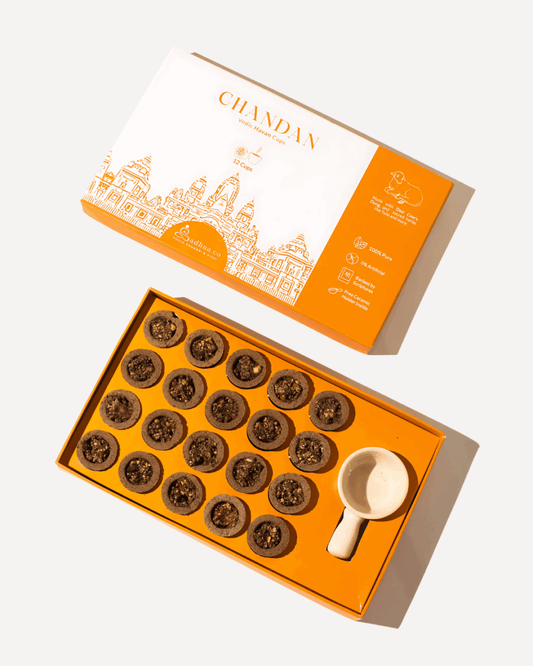
Havan requires a havan kund (fire vessel) or havan cup, samagri (a mix of herbs, ghee, and grains for offering into the fire), and ghee. Our Organic Havan Cups are made from cow dung and natural herbs — they're designed for indoor use and produce significantly less smoke than charcoal-based alternatives.
Havan is done on Ekadashi, amavasya, purnima, and special occasions. If you do it monthly, a small supply of havan cups covers the need. For weekly havan, stock accordingly.
For Mantra Japa
A Japmala — prayer beads — is used to count mantra repetitions. The standard count is 108 beads. The bead material corresponds to tradition: Rudraksha for Shiva and Hanuman mantras, Tulsi for Vishnu and Krishna, Sphatik (crystal) for Devi mantras and Gayatri.
Our guide to choosing the right Japmala covers this in detail, including what the different faces of Rudraksha mean and how to check quality.
For Satyanarayan Katha and Similar Pujas
These rituals require a more extensive samagri list: panchamrit, banana, coconut, betel leaves, dry fruits, specific sweets, and often a set of items that varies by region. A detailed vidhi booklet for the specific katha is essential for getting the sequence right.
For Navratri and Devi Worship
Red items feature heavily: red cloth, red kumkum, red flowers (hibiscus especially), red bangles, and sindoor. Additionally: coconut, betel leaves, fruits, and in some traditions, specific offerings like paan and sweets vary by regional custom.
What to Check When Buying Pooja Samagri
Incense: Bambooless is the quality benchmark. White or light grey ash indicates clean combustion. If the smoke is black or dark grey, bamboo or charcoal is burning.
Ganga Jal: Should come from a verifiable source — ideally labelled with origin. Generic "holy water" sold in bulk without sourcing information is often tap water with a label.
Kumkum: Pure kumkum is slightly orange-red. Bright cherry-red is usually synthetic dye.
Ghee: For ritual use, cow ghee from a single source is better than blended or buffalo ghee. The colour and aroma are different — pure cow ghee is pale yellow and has a mild, clean scent.
Havan samagri: Should smell strongly of herbs even before burning — camphor, dried herbs, and ghee should be clearly detectable. Cheap blends are often mostly sawdust with minimal active ingredients.
Building a Pooja Space from Scratch
If you're setting up for the first time, here's a prioritised order for what to buy:
First: A clean surface or shelf dedicated to the puja space. A small wooden or marble platform works. The space should be at eye level or above when seated.
Second: A murti or image of your deity, a brass diya, and a small puja thaali.
Third: The basics — ghee or oil, wicks, kumkum, akshat, a small container for Ganga Jal, and incense sticks.
After that: Japmala if you're doing mantra japa, dhoop for longer sessions, and havan cups if you observe weekly or monthly havan.
Our monthly pooja kit is designed around this same priority — it includes the items you'll use every day and run through fastest, so you're not placing multiple orders throughout the month.
Frequently Asked Questions
Q: What is the difference between pooja samagri and pooja thaali?
Pooja thaali is the plate used to arrange and present offerings during worship. Pooja samagri refers to all the items used in worship collectively — the thaali is one item within the broader samagri.
Q: What is the most important item in pooja samagri?
The lit diya (lamp) is considered the non-negotiable. Most traditions hold that a puja conducted without a flame is incomplete. Everything else has context-specific importance.
Q: Can I use synthetic incense sticks for daily pooja?
You can, but the quality of your practice environment suffers. Synthetic incense and bamboo-core sticks produce chemical smoke that irritates the respiratory system over time. For occasional use it's a minor issue. For daily use, bambooless incense is worth the upgrade.
Q: How often should pooja samagri be restocked?
Incense and camphor are consumed fastest — restocking monthly is typical for active daily worship. Kumkum, haldi, and roli last several months. Ganga Jal, if used sparingly, lasts 1–2 months.
Q: Is there a standard list of pooja samagri for all Hindu rituals?
No. Samagri requirements vary by deity, ritual, and regional tradition. The core list (diya, incense, flowers, kumkum, akshat, camphor) applies across most traditions. Beyond that, the specific ritual (havan, abhishekam, katha) and the deity being worshipped determine additional requirements.
Q: What is panch samagri?
Panch samagri is a five-ingredient mixture used in havan, traditionally comprising loban (benzoin resin), guggul, dried cow dung, ghee, and sugar. It's different from panchamrit, which is the five-nectar mixture used in abhishekam.
Q: Can I buy all pooja samagri in one place?
Yes. Our pooja samagri collection covers incense sticks, dhoop cones, havan cups, attar sprays, and related items. For a month's supply in one order, the monthly pooja kit is the most convenient option.
About the Author: Akshita Singh writes for Sadhna.co on Hindu ritual practice and pooja essentials. Sadhna.co is a pooja brand based in Sahibabad, Uttar Pradesh, making bambooless incense sticks, dhoop cones, havan cups, and attar sprays for daily and special rituals.